Retaining Wall Costs Explained for Minnesota Homeowners
Even a small 3' x 12' retaining wall can run $5k+. We explain why, compare wall types for Minnesota’s climate, and share more budget-friendly options.
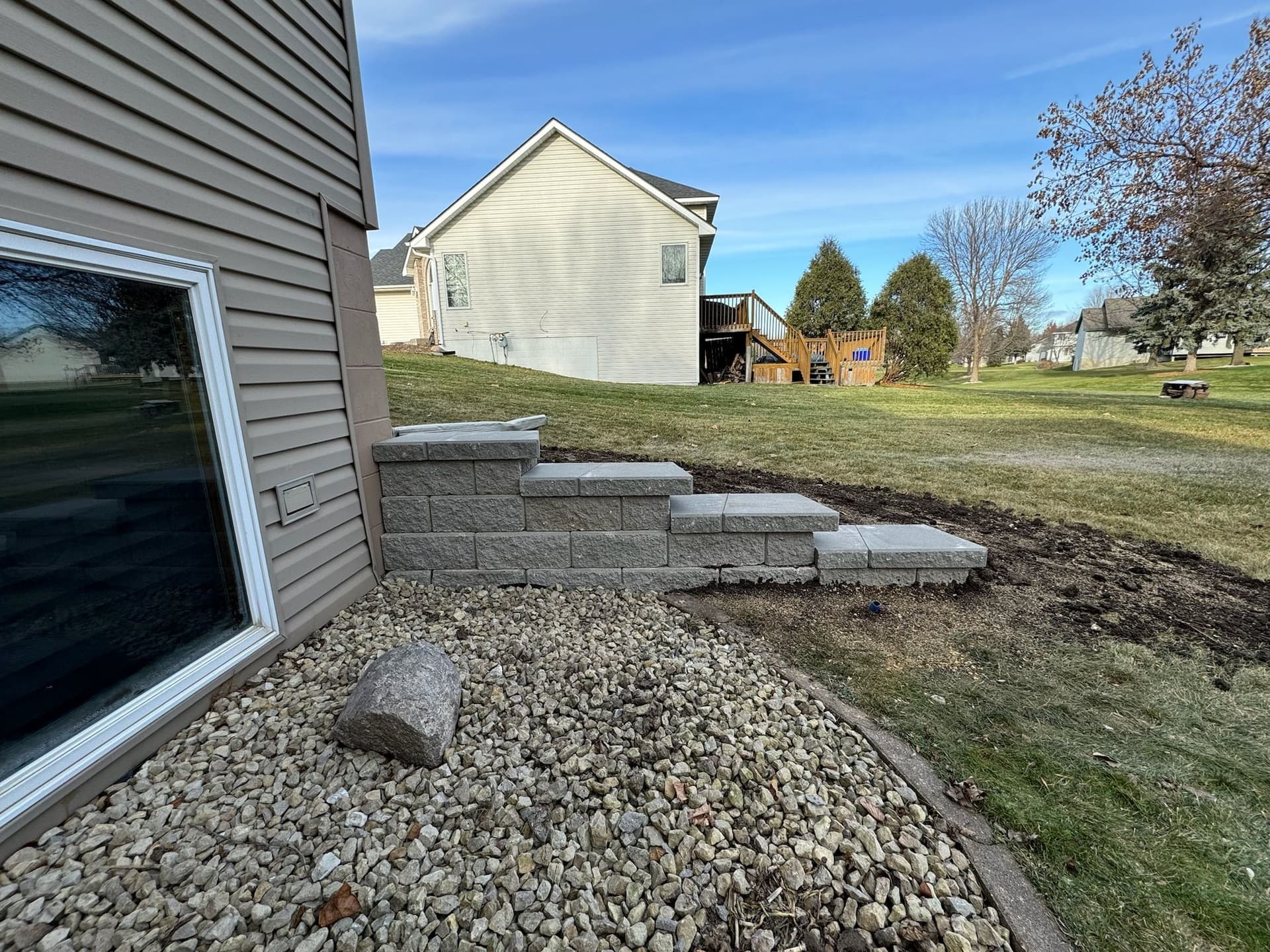
Why a “Small” Retaining Wall Can Still Be a Big Investment
We recently got a call from a homeowner in St. Paul – we’ll call her Julie – who wanted to replace an old cedar retaining wall along the sidewalk. It was only about 3 feet tall and 12 feet long, and she’d found a split-face block she really liked. Another contractor had quoted her around $5,000, and she was hoping to keep it closer to $1,800.
When we told her our price would likely still land in the $3,000–$4,000 range, she was understandably shocked. From the street, a little wall looks simple: a few blocks stacked up, maybe some rock behind it. But as we walked Julie through what actually goes into building a long-lasting wall in Minnesota’s freeze–thaw climate, it started to make more sense.
In this post, we’ll share the same explanation we gave Julie and break down why even a small retaining wall can be expensive – plus some more budget-friendly options that can still work well for a 3' x 12' wall or garden border.
What Really Goes Into a Proper Retaining Wall
From our side of the shovel, the visible wall blocks are just the tip of the iceberg. Here’s the “hidden” work we build into even a small wall so it doesn’t heave, lean, or fail after a couple of winters.
Excavation and Base Preparation
For a typical 3-foot-tall block wall, we usually:
- Excavate about 12" below grade where the front of the wall will sit.
- Install ~6" of compacted base material (we use class 5 limestone) in layers.
- Set a full base course of block below ground so the visible wall is anchored.
Every base block is individually leveled with a hammer and level. That precision is what keeps the wall straight and true when the frost moves the surrounding soil.
Drainage Rock, Pipe, and Fabric
Behind the wall, we typically excavate about a foot back and then install:
- Clean drainage rock up the height of the wall.
- Perforated drain pipe along the bottom to move water away.
- Geotextile fabric to keep soil from clogging the rock.
All of that is buried, but it’s crucial in Minnesota. When water gets trapped behind a wall and freezes, it expands and pushes hard. Without proper drainage, even a beautiful new wall can start leaning within a couple of winters.
Why Minnesota’s Freeze–Thaw Cycles Matter
Julie had done some research on dry-stacked walls and asked if we could skip mortar “because of the Minnesota weather.” She was on the right track. We almost never use mortar or poured concrete as a base for small landscape walls here.
Mortar and rigid concrete bases tend to crack and heave when the ground moves. A properly compacted class 5 limestone base paired with dry-stacked block lets the wall “move a little” with the frost cycles without breaking apart. That flexibility is one of the keys to long-term durability in our climate.
Comparing Wall Types: Cost, Labor, and Durability
For a basic 3' x 12' wall or garden border in a Minnesota yard, here’s how the main options typically stack up. Actual numbers will vary by site, access, and materials, but these ranges reflect what we commonly see.
Split-Face Block (Segmental Retaining Wall)
What it is: Manufactured concrete blocks designed to lock together, often with a textured “rock” face.
- Labor: Highest. Every block must be precisely leveled and aligned.
- Materials: Blocks by the pallet, class 5 base, drain rock, fabric, drain pipe.
- Drainage: Required. These walls are engineered systems.
- Durability: Excellent when built correctly; very stable in freeze–thaw.
- Typical range for 3' x 12': Around $3,000–$5,000 installed.
When it makes sense: You want a clean, finished look that will last decades and can handle soil pressure or minor slopes.
Boulder Walls
What it is: Natural boulders (fieldstone, limestone, trap rock) stacked to create a retaining face.
- Labor: Moderate. Fewer, larger pieces; less precise leveling than block.
- Materials: Boulders by the ton, some base prep, some drainage rock.
- Drainage: Still important, but the gaps between boulders help water move.
- Durability: Very good; stones won’t rot and can flex with frost.
- Typical range for 3' x 12': Often $2,000–$3,500 installed.
When it makes sense: You like a natural look and want to trim cost versus split-face block. This is often the best value for short walls in our area.
Timber or Cedar Walls
What it is: Wood timbers or cedar boards stacked and anchored into the slope.
- Labor: Similar to block; timbers must be carefully set and anchored.
- Materials: Timbers, spikes/plates, base material, drainage rock.
- Structure: Requires “deadmen” – timbers tied back into the grade every few feet.
- Durability: Shorter lifespan; wood will eventually rot, especially near grade.
- Typical range for 3' x 12': Roughly $2,000–$3,000 installed.
When it makes sense: You like the wood look and want a slightly lower upfront cost than block, understanding you may replace it sooner down the road.
Dry-Stacked Garden Borders & Low Walls
What it is: Smaller natural stone or block stacked without mortar, often for 1–2' high borders.
- Labor: Can be moderate; pieces still need fitting, but loads are lighter.
- Materials: Stone or small block, usually a lighter base and simpler drainage.
- Drainage: Still helpful, but less critical for very low, non-structural borders.
- Durability: Good for garden edging; less suited to holding back significant soil.
- Typical range for 3' x 12': Often $1,200–$2,500 depending on height and stone.
When it makes sense: You’re mainly after a border or raised bed look, not holding back a big slope. This can be a good compromise if your budget is closer to what Julie originally had in mind.
Choosing the Right Wall for Your Yard and Budget
When we talk with homeowners like Julie, we usually start with three questions:
- Is this wall structural (holding back soil or a slope) or mostly decorative?
- What lifespan are you hoping for – 5–10 years, or multiple decades?
- What’s a realistic budget range you’re comfortable with?
From there, we can usually narrow down the options pretty quickly. Sometimes that means confirming that, yes, a split-face wall really will land around $3,000–$4,000 even at just 3' x 12'. Other times, it means suggesting a boulder wall or a low dry-stacked garden border that fits both the site and the budget better.
If you’re staring at a small, tired wall and wondering why replacing it costs so much, you’re not alone. Once you understand the excavation, base prep, drainage, and Minnesota freeze–thaw realities behind that clean finished face, the numbers start to add up – and you can choose the wall type that makes the most sense for your home.